Rotoscoping is an animation technique where animators trace over actual motion picture footage, frame by frame. It produces "drawn" animation but looks very realistic action.
It is not a new technique. It was invented by animator Max Fleischer in 1915, and used in his groundbreaking Out of the Inkwell animated series (1918–1927) and was known as the "Fleischer Process" on the early screen credits, and was essentially exclusive to Fleischer for several years. Today it is done by computers, but the process is still called rotoscoping.
The rock band A-ha’s 1985 music video for "Take On Me" is a famous contemporary example of the technique being used. That video has more than a billion views on YouTube.
The video was directed by Steve Barron and animated by Michael Patterson and Candace Reckinger who won an MTV Video Music Award for Best Special Effects in a Video for this work. They rotoscoped around 3,000 frames over 16 weeks using the reference live-action scenes of the band.
An article about Danah Boyd's SXSW EDU keynote, "What Hath We Wrought?," caught my eye for the use of the phrase "weaponized critical thinking." As someone who has taught critical thinking in many classes and as a course in itself, the idea of "weaponizing" the subject was frightening.
That fear is what Boyd talks about. It comes from a lack of media literacy, fake news, media manipulation and, unfortunately, the democratization of access to media. That access was thought to be a key benefit of "Web 2.0" when we would becomes producers rather than just consumers of web and media content.
I do believe that this led to some rational discourse and more viewpoints getting exposure, but Boyd and others would argue that there was too much democratization. The founding fathers warned of a democracy where mobs could rule. With all the options and possible sources of information, most people gravitate (a word that I think implies this invisible force) to things that align with our own existing positions.
In her talk, Boyd summarized her research into the ways in which social media can often turn the habits of critical thinking against itself. Frightening.
I had a dream last night about Orson Welles, who I have written about here several times before. In the dream, he was doing a magic trick. He asked me to give him a coin. I placed a quarter in his gloved hand. He closed his hand and then opened it to reveal a key. He said, "This is what you were looking for, isn't it?"
I went downstairs, made my coffee and went online and did a search on his name. I thought that perhaps this was the day he was born or had died. It is not either of those. I searched on "Orson Welles magician," and it brought up links to the documentary about him by that name.
Magician: The Astonishing Life and Work of Orson Welles is a film I had not seen. I had tried last year unsuccessfully to find it on some streaming services. But there it was, on YouTube, for free - perhaps not legally, but I watched it this morning. If it is still available and you are interested, watch the version below (but go full screen).
And there is a brief scene in the film that is pretty much my dream. Somehow, that bit of film was in my head, and now I have rediscovered it.
A lot of learning is relearning and unlearning. Research always seems to overturn things we learned. Coffee, red wine, eggs, low-fat - good for you or bad for your health? Depends on the when and who of the research.
But we can learn something new every day and that's good for the brain. This One-Page Schoolhouse is full of quick lessons and, like a one-room schoolhouse, we cover all subjects.
Today we can look at new research that suggests that the way chameleons change color is very different from what scientists had assumed.
Check out this video by filmmaker and National Geographic Grantee Jason Jaacks that tells you about how color change is controlled by nanocrystals in a top layer of the lizards' skin.
This was filmed between 4th and 11th April 2011 at El Teide, Spain´s highest mountain. It is one of the best places in the world to photograph the stars and is also the location of Teide Observatories, considered to be one of the world´s best observatories.
The goal was to capture the Milky Way galaxy along with El Teide but a large sandstorm hit the Sahara Desert on the 9th April and then hit El Teide making it nearly impossible to see the sky with the naked eye.
The camera was set for a 5 hour sequence of the Milky Way during this time and surprisingly it captured the sandstorm which was backlit by Grand Canary Island making it look like golden clouds.
Watch the Milky Way shining through a Sahara sandstorm.
What if the characters of Broadway's The Importance of Being Earnest (2011) traveled through a time warp and woke up on the beach with Snooki and the gang of MTV's Jersey Shore?
The cast puts 'Jersey' in the mouths of Oscar Wilde's famed Britons. Think of it as a comedy of bad manners.
Part 1 in a multi-part series is this video, "Jersey Shore" Gone Wilde presented by cast in this video series created for Playbill by 'Earnest' stars Santino Fontana and David Furr.
After a brief history of the brief history of Massive Open Online Courses and the educational philosophy that drove the creation of the first MOOCs in 2008, this workshop was about academics deciding whether or not MOOCs offer opportunities for their college.
Examining MOOCs from the points of view of stakeholders - faculty, designers, administration, support staff and students - was our approach as we worked our way through the pros and cons.
The video was done by John at Symphony of Science. You can also check out his "A Glorious Dawn" by Carl Sagan, and John's website for more original music colorpulsemusic.com
We are all connected;
To each other, biologically
To the earth, chemically
To the rest of the universe atomically
-- Neil deGrasse Tyson
I think nature's imagination
Is so much greater than man's
She's never going to let us relax
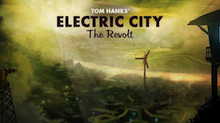
"It's best to ask no questions and be told no lies, here in the Electric City," says Tom Hanks as Cleveland Carr in an episode of Electric City. http://electriccity.yahoo.com
Hanks' new web series is something he thought about nearly eight years ago. It takes place in the familiar dystopia of a sci-fi standard - the post-apocalyptic society.
It looks like a low-budget TV animated series (produced by the Indian media company Reliance Entertainment, with Hanks' own production company, Playtone).
Equally interesting is that it's another big name entering original programming. In this case, it is on Yahoo, but it's similar to what Netflix, Hulu and YouTube have been doing lately.
Jerry Seinfeld's new series, Comedians in Cars Getting Coffee, is about Jerry picking up a comedian friend in a vintage car, driving around, and getting some coffee. The first one is with Larry David who observes that Jerry has "finally done the show about nothing."
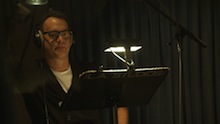
Hanks doing the voice work
Electric City has 20 episodes of five minutes each. I watched 3 so far and may continue. Maybe not. It reminds me a bit of reading a comic book series.
Hanks' character is a "grid operative" in a place where some "climate-based event" has left a dangerous, bleak, and electricity-starved world. Mad Max minus the gasoline? Not really.
I applaud the effort and the fact that it is free online. Let's see where these efforts go.
Spring is coming.
Exploring new exercise programs.
Jimmy Kimmel is offering this video for his Hottie Body Hump Club.
Completely in poor taste. Please do not view or click the link unless you really need to exercise more.
It must be rather strange to give a commencement speech these days. Students and parents want to be entertained more than educated. The education is over that day. We want to laugh.
Usually, schools try to get a mix. Someone famous and entertaining, and someone with all the real degrees (not honorary ones) to say wise things.
Here's a selection from this year from the celebrity speakers
JULIANNA MARGULIES speaking at Sarah Lawrence College's commencement ceremony
'I was so nervous [to speak], in fact, that I've done a bit of reconnaissance. I've read every graduation speech ever written. I sought advice from the smartest people I know, but mostly, I have been listening. Listening to your reflections on the school, listening to your plans postcollege, and listening to your thoughts on our future. Part of this listening was to help me write this speech, but selfishly, part of it was for my 2-year-old son [pause] because he has such a big stake in your actions. [She stops to wipe her eyes.]
Shortly after graduation, I got very, very, very, very lucky. I landed a role on a show called ER. It was a huge hit all over the world. I soon had money, accolades, status, and George Clooney. [Crowd cheers.]
NINA GARCIA speaking at Fashion Institute of Technology's commencement ceremony
"The fashion industry has a particular flair for making any slight feel as though it's the worst thing that's ever happened and any small victory as if it's the most extravagant accomplishment since the wheel. This emotional metronome can lead to a very surreal work environment — I promise that."
LISA KUDROW at Vassar College's commencement ceremony
''It's not like there's some kind of social network wherein I could communicate with such a large number of people at once...
...over the next eight years, my resolve and commitment was steadily challenged. Challenged by casting directors telling me to my face that I was horrible. Agents letting me know, 'It's hard; we don't know what to do with you. They want gorgeous on TV, you know? There's really not a place for you."
ANDERSON COOPER speaking at Tulane University's commencement ceremony
Trustees, honored guests, faculty, friends, and Who Dats — I was curious to see how the sign language interpreter would do 'Who Dats' — [Crowd laughs] thank you very much for inviting me here to speak on this incredibly special day.
...I don't need to give you advice today. I don't need to teach you, in this room, a lesson. The truth is, your class has taught me a lesson — and taught all of us a lesson. As you've heard several times already today and as you know too well, you are the class that came after Katrina. And even though you've heard it a lot doesn't make it any less true. You saw this city on its knees in those weeks and months after the storm, and yet you still applied to Tulane. You could have gone elsewhere, as the president said. A lot of folks probably said you were nuts to commit to New Orleans — some of your parents probably said the same thing. But you came anyway. You took a chance. You made a tough choice, but look at you now, look at what you've accomplished, not just for yourselves, but for New Orleans. Your choice helped this city rebuild, renew, and restart.
"Being a celebrity has taught me to hide, but being an actor has opened my soul."
Alec Baldwin, the award-winning actor and alumnus of NYUs Tisch School of the Arts, addressed the graduates at that school's ceremony. He received a Doctor of Fine Arts degree, honoris causa. He gets lots of cheers, some laughs and tries to give some serious talk too on commitment.
Yes, Charline looks suspiciously like the British girl, Crystal, in another Windows 7 commercial, but Charline...
She is speaking French. She has a nice American tan.
Even if my wife says her French is "colloquial" and that when she says "Did you hear me?" it sounds more like she is saying "Mountain Dew," there's something about Charline.
I understand you, Charline. I know all about too-much-caffeine.
Eirik Solheim has been experimenting with using still images from the same spot on his balcony in Oslo and creating a kind of "time lapse" video.
He did one in 2008 and has gotten a few million folks to check out his work (two million views on YouTube in addition to about one million on Vimeo and hundreds of thousands of views and downloads from other web sites).
He bought a Canon 5D Mark II which allows you to shoot stills and HD video, so it did it again in 2009.
A little bit different technique - shooting 30 second video clips each time and dissolving between clips for a kind of time lapse effect but with full motion.
He has several versions online.
I like this one shot with the wider 24mm lens that shows a year in 60 seconds. Here are about 60 zen (small z) moments for you. I like the wind...
If you are a fan of the cartoons in The New Yorker, then you should check out the animated versions they offer online. They have been offered for a few years as video podcasts and as streamed videos.
I like Bobby McFerrin's demo here which may be him addressing the pentatonic scale for an audience at the 2009 World Science Festival, but I like what it says about EXPECTATIONS too.
This runs less than 2 minutes and it's worth the watching. There's a great twist to it.
It was created for the AARP U@50 video contest. It's a kind of "reaction" to an Argentinian political ad titled "The Truth" that used the same technique.


 , Spain´s highest mountain. It is one of the best places in the world to photograph the stars and is also the location of Teide Observatories, considered to be one of the world´s best observatories.
 series, an interview with