Services

Showing posts with label science. Show all posts

The Science of Sleep and the Dreaming Brain


The experience of dreaming is nearly universal, yet its origins and purpose remain one of the great unanswered questions in science. 

On average, every individual spends about two hours each night traveling through seemingly real experiences that bubble up from the subconscious. Despite this ubiquity, dream recall is surprisingly low, with most people remembering only about two dreams per week. In rare cases, roughly one in every 250 people has never recalled a single dream.

Dreams largely arise during the Rapid Eye Movement (REM) phase of the sleep cycle, though not entirely. Sleep is a natural process conserved across evolution in nearly all animals with a brain, and the REM cycle repeats about four to six times per night, with each period lasting roughly 90 minutes.

Modern science has evolved from crude mid-1900s methods—like taping participants' eyes open—to using advanced techniques such as MRIs and the electroencephalogram (EEG), which link dreams to observable brain functions. Research suggests that during dream sleep, the brain connects new information learned during the day with already-stored memories, creating a "revised mind-wide web of associations." This process, blending emotion-driven visual imagery and memory consolidation, is theorized to help us make sense of experiences, regulate emotions, and prepare for future situations.5 Specific brain structures are involved in this process. 

The hippocampus, a region critical for memory formation, plays a major role in dreaming; studies show that people with damage to this area still dream, but their narratives lack the richness of detail described by others.


 The body is designed to prevent us from acting out our dreams through temporary paralysis of skeletal muscles (known as REM atonia). Failures in this process lead to certain phenomena, such as sleepwalking (somnambulism) which occurs most frequently in children, but only during the deeper stages of non-REM sleep when the protective muscle paralysis is absent. 

Sleep Paralysis is a well-known phenomenon that occurs when the brain awakens early but the body fails to "unfreeze" in sync, often resulting in terrifying hallucinations.

In contrast, lucid dreaming is a state where the dreamer is aware they are dreaming and can even control their actions. About 20% of people experience this at least once a month, though most people never report the experience. This heightened state is associated with increased activity in the frontal lobes, the brain regions responsible for decision-making and attention management, and may involve the emergence of a collaborative brain network. 

 Nightmares, considered parasomnias (undesirable events experienced during sleep), are unpredictable but have been linked to factors such as stress, anxiety, and trauma.

For most of recorded history, dreams were considered divine in origin, with the earliest record of dream interpretation dating back to Ancient Sumer. The first venture into modern theory was by the ancient Greek philosopher Heracleitus, who proposed that dreams were created within the mind. This idea was formalized with the rise of psychoanalysis in the late 1800s.

Famed Austrian psychologist Sigmund Freud believed dreams were symbolic expressions of desire and that interpreting their content—often using free association—could reveal truths about one's psyche. Separately, psychologist Carl Jung proposed the controversial idea of the 'collective unconscious,' a universal part of the unconscious mind containing innate elements called archetypes (like the Hero or the Shadow) that shape dreams across cultures.

However, the interpretation of dream patterns must also account for a cognitive bias called pareidolia, which is the tendency to find meaning and assume a generative force behind patterns produced by randomness. 

 Finally, while the question of whether animals dream depends on one's definition, studies on sleeping cats, rats, fish, and finches show their brains fire as if performing actions from waking life, and even spiders and insects exhibit REM-like sleep.

Dark Matter, Dark Energy and Normal Matter

Dark matter fascinates me and fascinates scientists, even we can't really prove it exists. 

Why do we think there is such a thing? Galaxies don’t rotate by the same physics that we know and understand. Scientists noticed that stars at a galaxy’s edge rotate faster than expected. 

How can we explain that? There must be matter that is invisible to us that is there. In 1998, the Hubble Space Telescope observations of a very distant supernova showed that a long time ago the universe was actually expanding more slowly than it is today. We once believed that gravity was causing the slowing expansion of the universe, but now that wasn't a certainty. 

expansion of universe 
Credit: NASA/STSci/Ann Feild[

The diagram above shows the rate of expansion since the universe's birth 15 billion years ago. The curve changes noticeably about 7.5 billion years ago, when objects in the universe began flying apart at a faster rate. Astronomers theorize that the faster expansion rate is due to a mysterious, dark force that is pulling galaxies apart. 

Astronomers know more about what dark matter is not than what it actually is. Roughly 68% of the universe is dark energy, and dark matter makes up about 27%. The rest is everything on Earth. This "normal matter" is less than 5% of the universe. Actually, that hardly makes it qualify as the"norm."

Most of the universe is made up of dark energy, and that mysterious force drives the accelerating expansion of the universe. The next largest ingredient is dark matter. 

At one time, the theory was that MACHOs (Massive Compact Halo Objects) were the cause.  A MACHO, such as a brown dwarf star, would be so massive that it would bend light around them. We know they exist, and we know they are out there, even though they are too dark for us to see. But this theory fell out of favor because there are not enough of them to make the galaxy-rotation math work.

Astrophysicists next came up with the WIMP (Weakly Interacting Massive Particles - the scientists do have a sense of humor). Maybe the universe is full of very small things we can’t see.

And maybe dark matter is made up of a different object we have never observed. One candidate is the neutralino.

We keep looking. The Large Hadron Collider, one of the most expensive science experiments ever built, is looking, but hasn't found them. But we do know that the universe is "heavier" than what we can see.

"There are more things in heaven and earth, Horatio, Than are dreamt of in your philosophy," says Hamlet and that continues to be true. 

This month a TV series titled Dark Matter, based on the novel of the same name by Blake Crouch hits streaming service Apple+.

Dark matter and the expanding universe don't keep me up at night, but it did bother Alvy in the film Annie Hall.

The History of Aspirin

Aspirin1

I wrote on another blog about the origin of the word "aspirin."  I'm repurposing some of that here because it is an interesting bit of chemistry and marketing history.

The German pharmaceutical company Friedrich Bayer received a patent for Aspirin in 1899. It was once probably the most ubiquitous of nonprescription drugs. It is probably not as popular today as people use over-the-counter pain relievers that are less irritating to your stomach.

Like many drugs, aspirin was found in a plant - the bark of the willow tree. Attempts to synthesize a version were underway by many international companies. 

The pain-relieving aspect was not new at all. Willow and meadowsweet were used as pain remedies by the Sumerians and Egyptians as early as 3000 BCE. 

The Greek physician Hippocrates reported giving willow-leaf tea to women in the throes of childbirth to help ease their labor pains.

In 1783, an English clergyman named Edward Stone wrote a letter to the Royal Society to say that he had much success in relieving ague and fever in his parishioners by giving them dried white willow bark. 

In 1828, a German pharmacy professor isolated the active ingredient in willow bark and named the bitter yellow crystals “salicin,” after the Latin name for white willow — Salix alba. 

But extracting the salicin from plants was difficult, and required a large amount of plant matter to produce the necessary quantity. A synthetic version became the goal. 

A German chemist named Hermann Kolbe first synthesized salicylic acid in 1860, but in 1895, a Bayer chemist named Felix Hoffmann was given the task of developing a “new and improved” synthetic salicylic acid product. 

Hoffmann's father had rheumatism but couldn’t take salicylic acid without vomiting because it irritated his stomach, so his study found that combining an acetyl group with salicylic acid would yield a gentler product. He came up with an effective synthetic version in 1897.

Bayer sought a patent for the brand name Aspirin: “A” for acetylsalicylic acid, the synthetic compound developed by Hoffmann; “-spir” for Spiraea ulmaria, or meadowsweet, which was a botanical source of salicylic acid; and “-in” because it was a common suffix for drugs at that time. By 1950, it was the best-selling pain reliever in the world.

X-Ray and Röntgenogram

First medical X-ray by Wilhelm Röntgen of his wife Anna Bertha Ludwig's hand - 18951222.gif
Wilhelm Röntgen Public Domain, Link

In 1895, Wilhelm Röntgen, a physics professor in Bavaria, took the very first X-ray image of the human body. He called it a “röntgenogram.” It was an image of his wife’s hand. 

He didn't know what impact the imaging might have on his wife. No one knew. Röntgen’s X-ray used 1,500 times the dosage of radiation used by modern machines, and it took 90 minutes of exposure to get the full effect. 

Maybe Mrs. Röntgen might have sensed something because when she saw the skeletal image of her hand, she exclaimed, “I have seen my death!”  It took many years before people made the connection between frequent exposure to X-rays and higher rates of cancer. 

The invention was a breakthrough as it allowed views of the human body without surgery. In less than a year, the Glasgow Royal Infirmary became the first hospital to set up a radiology department. Doctors and experimenting scientists X-rayed all kinds of things found in bodies: a penny in a child’s throat, kidney stones, bone fractures, and shrapnel in a soldier. 


Color X-ray photogram.jpg
Natural color x-ray photogram by NickSpiker CC BY-SA 4.0Link


The Biggest Explosion in the History of the Universe


BOOM! It was the biggest explosion in the history of the universe and you didn't hear a thing.

According to space.com, astronomers saw a cosmic explosion that ripped through the center of a distant galaxy cluster. They saw it but didn't hear it because, as the tagline on the poster for the movie Alien (1979) reminded us -"In space, no one can hear you scream."

Simona Giacintucci, of the Naval Research Laboratory in Washington, D.C., said in a statement. "...you could fit 15 Milky Way galaxies in a row into the crater this eruption punched into the cluster's hot gas."

The explosion was in the Ophiuchus cluster 390 million light-years from Earth and it is thought that the source was a supermassive black hole.

NASA's Chandra X-ray Observatory reported a strangely curved edge in the cluster, but after analyzing the combined data from Chandra and Europe's XMM-Newton space telescope, as well as radio information gathered by the Murchison Widefield Array in Australia and the Giant Metrewave Radio Telescope in India, it shows that the curved edge is indeed part of a cavity wall.

Not that most of us can grasp the explanation but it likely resulted when the black hole's outburst accelerated electrons to nearly the speed of light. The energy released by the blast is hundreds of thousands of times greater than explosions typically seen in galaxy clusters, and five times higher than the previous biggest one.

The Deepest Hole in the World

Is it really the deepest hole in the world? I keep thinking that there must be some natural hole that goes deeper, but apparently I'm wrong.

The Russian Kola Superdeep Borehole was drilled starting in 1970 to learn about Earth's crust. American scientists had and then abandoned their Project Mohole in 1966.


After 24 years of digging, the deepest branch of the Kola Superdeep Borehole stopped in 1994 at 12,262 meters (about 7.5 miles).

It's not a wide hole all the way down (nine inches in diameter at the bottom) but it is deeper than the Mariana Trench.

If you want to insult the Borehole, you can say it is not the longest hole. That adjective belongs to an oil well, but it doesn't go anywhere as deep. S there.

What has this deep hole revealed to us? There's water down there, but it's not like a pool. It is
probably water formed from stray oxygen and hydrogen atoms squeezed out of rock minerals.

They found plankton fossils down at 6700 meters. Explain that, please.

And it's hot. 350+ °F.

Did they reach the center of the earth, like that novel and movie I loved as a kid?  Not even close. With all that digging, they only went 0.2% of the way to the center.

The End of the Year and the End of the World

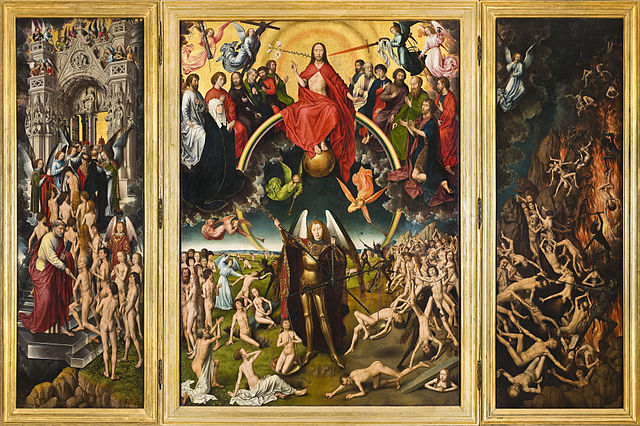
The Last Judgment by painter Hans Memling. In Christian belief, the Last Judgement is an apocalyptic event where God makes a final judgement of all people on Earth.

I wrote elsewhere about Isaac Newton's 1704 prediction of the end of the world. sometime around (or after, "but not before") the year 2060.

He used some bizarre mathematical calculations to come up with the year. Where did he get his inspiration? From the "prophecies" of the Bible's Book of Revelation.

Don't you find it odd that Sir Isaac Newton, an English mathematician, physicist, astronomer, theologian, and author who is widely recognised as one of the most influential scientists of all time, and a key figure in the scientific revolution was looking for clues to calculate the end of the world in the Bible? Well, he believed that his work on universal gravitation (gravity), developing the three laws of motion which form the basic principles of modern physics, and his discovery of calculus which led the way to more powerful methods of solving mathematical problems would not be his most important work.

He thought that by deciphering ancient scriptures and uncovering the nature of the Christian religion he would be able to calculate (not just predict) the end of the world.

We still have some decades until his 2060+ but the odds are against Newton for being correct. Plenty of religious doomsayers have predicted the end of the world with Bible codes. And the years have passed with no end.


But Newton was a scientist. Shouldn't that change the equation? He has been joined by modern day scientists who make predictions about the end by interpreting data from climate research, sustainability estimates, population growth stats and by looking at dwindling resources. In their calculations, there are no codes from ancient texts or theology. They don't predict battles between good and evil.

I would just dismiss Isaac's 2060 if it wasn't that I also found online that some scientists using their cold, hard facts and numbers came years pretty close to his number. These are not predictions of an apocalypse, but a man made collapse of industrialized societies and agricultural production, unsustainable population growth and pollution levels, unstable climates, and dissolving nation states.

The "religious" but quite unscientific Ron Weinland had predicted the world would end in 2011, 2012, and then 2013. No, no, no. This year he predicted that Jesus will return on June 9, 2019.  What? No summer vacation in 2019?

And Jeane Dixon predicted that Armageddon would take place in 2020. Of course, she had previously predicted the world would end on February 4, 1962.

If you stick with the scientists, the dates are a lot further away. David Powell calculates that the Earth and the Moon will be most likely destroyed by falling into the Sun, just before the Sun reaches the largest of its red giant phase when it will be 256 times larger than it is now. That will happen in 7.59 billion years. Plenty of summer vacations yet to come.

Walk This Way

A new study suggesting hominins were walking across a Greek island 5.7 million years ago is here to blow your mind. I have always been interested in following and identifying animal tracks, and I have had an interest in paleontology and evolutionary biology and anything related ever since I found a fossil when I was ten years old. So, of course, I was fascinated to see that multiple depressions preserved in a layer of 5.7 million-year-old sediment were found and they certainly look like they belong to a hominin, a member of our lineage. 

The site where they were found at Trachilos, on the Greek island of Crete. No hominin was thought to set foot there until millions of years later. 

Why do they think this (called Ardi) is hominin? Five forward-facing toes with the big toe in line (unique among primates) and the ball of the foot and a long sole which helps for walking long distances - and these tracks have those characteristics, though not as evolved as modern human feet. But the Discover blog points out that it is not that simple. 

Ardipithecus ramidus was walking around Ethiopia 4.4 million years ago. Ardi is considered a direct ancestor to the australopiths (you may have heard of "Lucy") and down the evolutionary road, us. But Ardi’s feet are much more ape-like with that big toe sticking out like a thumb. In other words, Ardi’s feet appear to have been more primitive than those of the potential Trachilos trekker, even though Ardi is more than a million years younger. 

The fossil record has so far told us that hominins evolved in Africa. If these are hominin footprints, they may have come from someone who originated either in Europe or Africa. The paper that revealed these "footprints" may be more scientific than you want, but here is the start of the abstract for "Possible hominin footprints from the late Miocene (c. 5.7 Ma) of Crete?"
"We describe late Miocene tetrapod footprints (tracks) from the Trachilos locality in western Crete (Greece), which show hominin-like characteristics. They occur in an emergent horizon within an otherwise marginal marine succession of Messinian age (latest Miocene), dated to approximately 5.7 Ma (million years), just prior to the Messinian Salinity Crisis. The tracks indicate that the trackmaker lacked claws, and was bipedal, plantigrade, pentadactyl and strongly entaxonic."
Another paper was published based on the discovery of a few teeth more than 7 million years old found in Greece and Bulgaria. They might also be hominin. Might be.

Doubters may ask how we even know that the tracks are that old. They are dated by analyzing marine microfossils in layers of rock above and below them. The authors of the study point out that these were tracks made when you could walk all of Africa and into Europe without getting your feet wet.

A friend who I talked with about all this laughed and said "You believe too much in science, which always seems to turn out to be wrong."  No, I would argue, science is conservative. It wants evidence, and it will easily admit to error when new evidence is found. We know a lot about evolution, but we are still learning.

When the Sun and Clock Agree


One of my daily web stops is EarthSky which reminded me that this is the time of year that for a few days clock time and sun time agree. As someone who has a sundial in the garden since childhood, I do pay attention to that shadowy movement.

When the midday sun climbs highest today, if you have a sundial, it will read 12 noon and your local clock will also read 12 noon.

I have always had a sundial in my garden. It keeps me in touch with the movement of the Sun during the day and during the seasons.


Of course that pesky daylight savings time game we play might make your clock say 1 pm today when the sundial says noon. It's all so confusing.

Your local clock time is standard clock time, as long as you live on the meridian that governs your time zone. Denver and Philadelphia, for example, are on the meridian for their respective time zones. East of the time zone line, then your local time runs ahead of standard time and west of the time zone line, local time lags behind standard time.

The sundial and clock agree four times a year: on or near April 15, June 15, September 1 and December 25.

My simple sundial shows a shadow from its style onto a surface marked with lines indicating the hours of the day. The style is the time-telling edge of the gnomon, the straight edge. As the sun moves across the sky, the shadow-edge aligns with hour-lines.

There are plenty of sundials available to you at a wide variety of prices and complexities.

Sundials that directly measure the sun’s hour/angle must have that edge parallel to the axis of the Earth’s rotation to tell the correct time throughout the year. My simple one needs some adjustments during the year and I do play with time and move it to match my clock time every once and awhile.

Isaac Newton had a pretty interesting variation on the sundial. He used a small mirror placed on the sill of a south-facing window. The mirror would cast a single spot of light on the ceiling and, depending on the geographical latitude and time of year, the light-spot on the ceiling was pretty accurate to the marking he made.

I think it's a good idea to pay attention to the cycles in our lives, both natural and man-made. They are very much a part of us, whether we pass attention to them or not.


I would not mind having a Copernicus Armillary (above) in my home, though I suspect my wife would not think it appropriate to our decor - and might not appreciate me paying $3000 for it. It is an astronomical instrument that would have been found in libraries and laboratories of the past. I did find some online for less than a hundred dollars so maybe...


More on sundials at Weekends in Paradelle 

Dinosaurs in Amber

Reconstruction shows a small, feathery coelurosaur.
The resin-coated branch nearby could snag part of its tail and become amber.
Image: Chung-tat Cheung

I saw lots of news stories recently about the discovery of dinosaur feathers in a piece of amber. The finding has helped provide significant insight into dinosaurs' feather structure and evolution, which can't be determined from fossil evidence.

But my favorite part of the story is that this was not a case of scientist digging out in the field and carefully unearthing specimens in a place thought to be once occupied by dinosaurs. A scientist chanced upon the specimen while shopping in an amber market in Myitkyina, Myanmar.

Microscan of the specimen


Lida Xing found the amber and bought it. She realized it was an important find and is the lead author of the paper on the specimen. She is a lecturer at the China University of Geosciences in Beijing.

The dinosaur tail could have ended up as a keepsake or piece of jewelry.

Researchers use CT scanning and microscopic observations and were able to see the feathers and also found that hemoglobin, a protein in red blood cells that carries oxygen.

The theory that dinosaurs are crelated to birds is not new. The scientific consensus is that birds are a group of theropod dinosaurs that evolved during the Mesozoic Era. A close relationship between birds and dinosaurs was first proposed in the nineteenth century after the discovery of the primitive bird Archaeopteryx in Germany.

Jurassic Park amber
Many of us remember amber as the source of dinosaur DNA in the first Jurassic Park movie. Amber preserves tiny snapshots of ancient ecosystems. They preserve things that fossils do not contain, such as three-dimensional arrangements and labile tissues.

In the film, blood inside a mosquito found in amber is used to get dinosaur DNA which is spliced with frog DNA to start the dinosaur cloning process.

But that's a movie, and I read that entomologists say that the particular mosquito used in the film is ironically the only species that doesn't suck blood at all.


Understanding the Math and Science of Animation

I am a proponent of the concept of teaching in a STEAM (science, technology, engineering, art, math) framework that goes across disciplines. I have seen many attempts to use science and math in teaching art - some successful, some not.

A new project that does this in an engaging way is a collaboration between Pixar Animation Studios and Khan Academy that is sponsored by Disney. Called "Pixar in a Box," it gives a look behind-the-scenes at how artists at Pixar need to use STEM to make art.

To make balls bounce, leaves in trees move in the wind, fireworks explode or realistic rippling water takes more than drawing skills. It requires computer skills and considerations of math, science such as physics and digital humanities.

How do you make animated hair
look like real life hair?
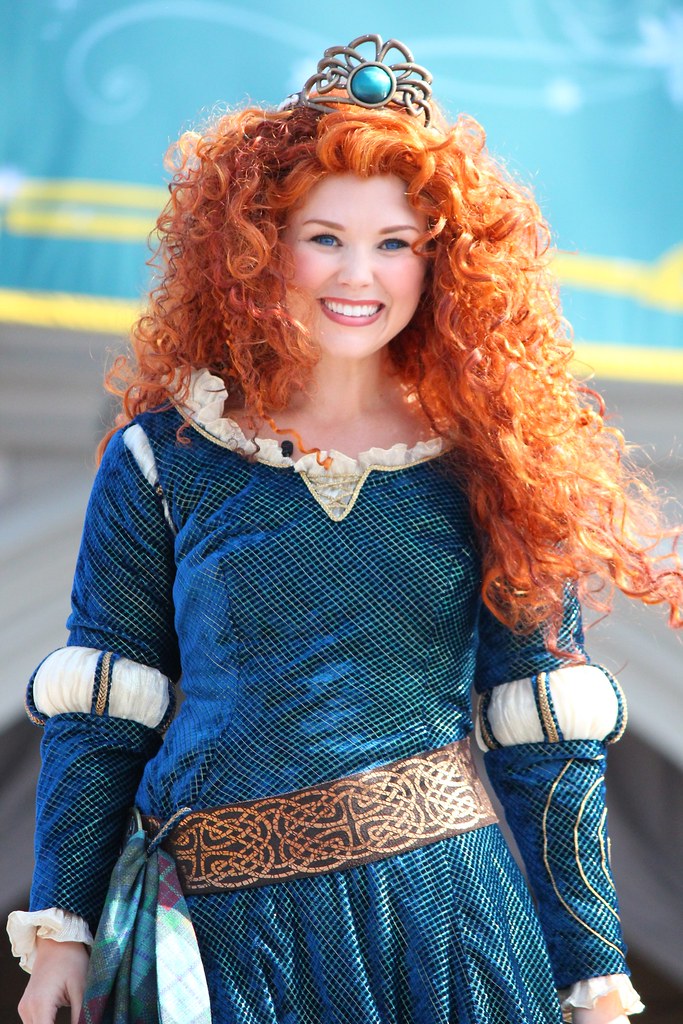
One tough task in animation is creating realistic hair on characters. Drawing hair is not that difficult. But making hair that moves in a natural way as character move is very tough. In this learning series of videos on simulations, the Pixar artists use hair as an example of an animation problem that needed to be solved. Using examples from their films, such as the character Merida in Brave with her bouncy and curly hair, you learn how millions of hairs can be simulated if you think of them as being a huge system of springs.

As the lessons progress, you can learn about animation roles and will discover what a technical director does in the animation process.


The lessons are appropriate for grades 5 and up - though I can see many adults and younger kids interested in animation from a technical or artistic side enjoying the free series.

How Chameleons Change Colors

A lot of learning is relearning and unlearning. Research always seems to overturn things we learned. Coffee, red wine, eggs, low-fat - good for you or bad for your health? Depends on the when and who of the research.

But we can learn something new every day and that's good for the brain. This One-Page Schoolhouse is full of quick lessons and, like a one-room schoolhouse, we cover all subjects.

Today we can look at new research that suggests that the way chameleons change color is very different from what scientists had assumed.

Check out this video by filmmaker and National Geographic Grantee Jason Jaacks that tells you about how color change is controlled by nanocrystals in a top layer of the lizards' skin.


The Antikythera Mechanism: Astronomical calculator from 2000 Years Ago

a fragment of the Antikythera mechanism

The photo above doesn't look like any part of the history of computers. Do they date back a millennia to a time of analogue devices?

Some claim that the world’s oldest known “computer” is the Antikythera mechanism. This now badly-corroded bronze artifact was found in 1901 in the remains of a shipwreck near the Mediterranean island of Antikythera.

In the 1970s, using radiography, it was determined that the device is a complex mechanism with at least 30 gear wheels (some have certainly been lost).

It is more accurate to say that it is a mechanical calculator than computer because it can't be "reprogrammed."

That doesn't diminish that is is a very impressive Greek astronomical device for its time, which was around 100 BCE.

About the size of a shoe box, with dials front and back faces, it could be used to show using pointers where the sun and moon were in the sky, the current phase of the moon, the 19-year cycle of lunar months, the 18.2 year Saros cycle of lunar and solar eclipses and probably other celestial events.


The Antikythera Mechanism Research Project in Greece is still discovering inscriptions that tell what stars were just becoming visible at different times of year.

Of course, these things were known at the time of the device. The Greek astronomer and mathematician Geminos had written about these things, but to build a mechanism to do the calculatons was extraordinary.

The presumed date of the shipwreck is around 60 BC, and the location of the shipwreck seems to point to the mechanism originating on the island of Rhodes, from where there is a contemporary historic record from the writer Cicero of such devices.

A 16mm Education


My elementary school days were the 1960s and back then seeing a film in class was a big deal. Those 16mm educational films often left a bigger impression on me than the books and lessons. A decade or so later and I was the teacher in the classroom and I became very good at threading those old 16mm projectors that often ate up the film.

Television as an educational tool was pretty rare. I recall my fellow students sitting on the floor of the gym in 1962 to watch one small television set as John Glenn became the first American to orbit the Earth.

A bit more than a decade later I was threading one of those 16mm projectors as a teacher to show my students films. Some teachers took advantage of using films a bit too often. We called them "plans in a can" and they were popular emergency plans in case you were absent without warning or on a day before vacation.

I was pretty frugal in my use of films, but I also taught a course on film and video production, so I think I had legitimate reasons to show films. Before there were home video players, 16mm films were the only way to do it.

The Sony Betamax hit the U.S. in 1975, and my school bought a VHS videocassette recorder (VCR) in 1977 when it was edging out the Betamax for the home video market. That VCR was something I used more and more, though my students were still shooting their own video on reel-to-reel VTRs (videotape recorders).

Sony changed that with their 1983 Betamovie cassette camcorder. My school bought a full size VHS camcorder and so did I. My first home movies of my newborn son were recorded with a video camera plugged into a VHS deck.

But I have very fond and surprisingly vivid memories of those old 15mm films that I saw as a kid in school.

Many of them have emerged online. I assume that many of these films have had their copyright lapse, or maybe the companies that produced them have gone out of business or just don't care about their use any more.

I recall this film on "Lunchroom Manners" as one I saw in school. I also recall Pee Wee Herman using part of it in one of his shows. Watching "Mr. Bungle" in school settings today reminds me of my own school and the kids look like a lot I did then and my fellow students. Since I have no film and video of my own early days, these are like home movies.


I can imagine teachers in the late 1940s and 1950s showing in a health class films like the 1951  "Going Steady." (It doesn't portray going steady as a good idea.) And I'm not sure how teenagers in 1949 would have viewed the tips in Dating Do's and Don'ts. These were made by Coronet Instructional Films, which produced hundreds of films for the school market.

Public domain films from the Library of Congress Prelinger Archive and Archive.org can be a real trip down memory lane for people who came of age in the 1940s through the 1970s.

But the films I saw in school that left the biggest impression on me were the ones about science. Many of them were well made and from Hollywood producers and studios. I vividly recall "Our Mr. Sun," a film directed by Frank Capra who is best known for It's a Wonderful Life, Mr. Smith Goes to Washington and many others.


That film launched the Bell System Science series. My father worked at Bell Labs in New Jersey then, so I thought then that he might have had some vague connection to these films (he didn't). It was the time time of the space race with Russia and an early version of STEM education that we all needed to know more about science. My father was determined I would be the first in the family to attend college and really wanted me to become an engineer.

With animation and live action, "Our Mr. Sun" was really well-made for the time. Capra had been producing documentaries for the Army during WWII such as the Why We Fight series and this documentary side business continued after the war. I know I saw that film multiple times in school, but this Technicolor beauty was originally telecast in 1956 and 1957 to 9 million homes and then some 600 16mm prints were distributed to schools and community organizations through the Bell Telephone System film libraries.

Another film I recall was on the atom. I grew up in that "atomic age" when the fear of nuclear war was very real. The film I recall was produced by Walt Disney Educational Media. Walt Disney began hosting his own television show for ABC in 1954. In exchange for a weekly hour-long Disney television program, ABC was funding some of the construction of Disneyland. The show was originally named Disneyland but went through later incarnations as Walt Disney Presents, Walt Disney's Wonderful World of Color, The Wonderful World of Disney etc. All in all it ran for an amazing 54 years.

The "Our Friend the Atom" was a pro-nuclear energy film but it did compare atomic energy to a genie in a bottle, both of which are capable of doing good and evil.


Not all the films were about hard science and another one I recall must have had some impact on my decision to go into the humanities and major in English. Another from the Bell Science series produced by Frank Capra was "Alphabet Conspiracy" which was the story of the science of language and linguistics. The premise was a plot to destroy the alphabet and all language and it featured the very odd Hans Conried.

The growth of television after WWII scared many parents and educators. Kids were watching a lot of TV and, like film and comic books before it, the fear was that it would rot their minds. The same cry was heard with videogames, the Internet and now with smartphones, which contain all those formats.

I wrote my Master's thesis on the influence of television on children in regard to violence and isolation. There is no doubt that all this media influenced several generations, but I'm not sure that it rotted any brains. I suspect it inspired many kids.

Chimeras Aren't Just for Mythology and Games


A sphinx, a mythical creature with the head of a human and the body of a lion.
Photo: La Granja, Spain, mid-18th century via Wikipedia
I first think of chimeras creatures from Greek mythology. One was a fire-breathing hybrid that was part lion, with the head of a goat and a tail that looked like a snake. But the term has come to mean any mythical or fictional animal with parts taken from various animals, or even something non-animal made of very disparate parts. 

This summer, a lot of virtual explorers have been playing the video game “No Man’s Sky which seems to have knocked Pokemon Go out of the top of the news feed this month. This game allowed players to discover overnight 10 million different alien species - chimeras - in the game galaxy.

Okay, it's just a game, but what is intriguing about its design is that the company that built it (Hello Games) did not animate.create all the game's alien creatures. Their galaxy is populated by the computer program using a process called procedural generation.

Chimeras in No Man's Sky


The game uses "Superformula," an algorithm discovered by botanist Johan Gielis, that describes symmetrical and asymmetrical shapes (boulders, leaves, animal horns) and creates life forms. Those life forms are chimeras made of organs and parts that are remixed over and over by the algorithmic engine.

It is smart enough to consider what type of chimera would fit in the surrounding area, and then chooses a variety of types. Not unlike mythology, you may get a lion's body with the head of a rhino and the legs of a gazelle.

It has to also consider things like balance and weight and create an appropriate skeletal frame. You can't have that rhino head on a chipmunk body.


This idyllic space exploration and whimsical chimera creatures are interesting as a game, but they may begin to exist in the real world too.

A report from MIT's technologyreview.com says that "Human-Animal Chimeras Are Gestating on U.S. Research Farms." It's not a project to create the chimeras of mythology, but an approach to generating human organs by growing them inside pigs or sheep.

There was a funding ban put in place in the U.S. for this type of research, but some research centers went ahead anyway trying to grow human tissue inside pigs and sheep with the goal of creating hearts, livers, or other organs needed for transplants.

This creates immediate ethical issues for some people. Adding human cells to animal embryos comes close to merging the species.

Have you ever read The Island of Doctor Moreau, the science fiction novel by H. G. Wells, or seen one of its film adaptations? Wells' "exercise in youthful blasphemy" is about a shipwrecked man who ends up on the island home of Doctor Moreau. The doctor creates human-like hybrid beings from animals. Wells was interested in themes including pain and cruelty, moral responsibility, human identity, and human interference with nature.

This type of research was pushed into the news last September when the National Institutes of Health announced it would not support studies involving such “human-animal chimeras” until it had reviewed the scientific and social implications more closely.

But this month, the NIH said they plan to lift the moratorium on funding of certain controversial experiments that use human stem cells to create animal embryos that are partly human. The new policy permits scientists to get federal money to make embryos, known as chimeras, under certain carefully monitored conditions.

The ethical concerns remain, such as the possibility of  inadvertently (or intentionally?) creating animals that have partly human brains. That might endow them with some semblance of human consciousness or human thinking abilities.

What is a chimera developed human sperm and eggs and breed and produce human embryos or fetuses inside animals or hybrid creatures?


Yes, chimeras still sound like science fiction, but so much of science fiction has become in some form science fact.


Battling the Hayflick Limit

Fountain of Eternal Life crop.jpg
The Fountain of Eternal Life, Cleveland, symbolizing "Man rising above death, reaching upward to God and toward Peace." By Notwist -  Public Domain

Aging is one of life’s greatest mysteries. The biological aging of human beings, animals and other organisms is taken by most people as the natural course of events. But there are people who look at aging at the level of single cells within an organism (cellular aging).

But we don't think of aging as just physical. It is the accumulation of changes in a human being over time and that includes psychological, and social changes.

Aging is among the greatest known risk factors for most human diseases. Roughly 150,000 people  die each day across the globe and two thirds die from age-related causes.

I recently stumbled upon Calico LLC, an independent research and development biotech company established in 2013 by Google Inc. and Arthur D. Levinson with the goal of combating aging and associated diseases.

Google's Larry Page described Calico as a company focused on "health, wellbeing and longevity."  (The company's name is an acronym for "California Life Company.")

For all our interest and study, the causes of aging are unknown. But there are theories.

There is the damage concept whereby the accumulation of externally induced damage causes biological systems to fail. There is the programmed aging concept, whereby it is internal processes that cause aging.

Calico intends to use advanced technologies to increase our understanding of the biology that controls lifespan, and then devise interventions that enable people to lead longer and healthier lives.

It was back in 1934 that it was discovered that calorie restriction can extend lifespan. Well, it did double lifespan in rats. There are species that have negligible senescence (the condition or process of deterioration with age). There are even some species that seem potentially immortal, such as Hydra.

But what about humans? There are arguably cells with the potential for immortality. Cancer cells which have lost the ability to die such as the HeLa cell line and stem cells and germ cells producing ova and spermatozoa). Potential.

In artificial cloning, adult cells can be rejuvenated back to embryonic status and then used to grow a new tissue or animal without aging.

But normal human cells however die after about 50 cell divisions in laboratory culture. This is the "Hayflick Limit" discovered by Leonard Hayflick in 1961. Prior to Hayflick's discovery, it was believed that vertebrate cells had an unlimited potential to replicate.

Religion presents immortality as one of the promises of God to human beings who follow divine law. A few scientists, futurists, and philosophers have theorized about the immortality of the human body.

Keep in mind that the absence of aging would provide humans with biological immortality. But biological immortality is not invulnerability. We won't be superheroes and can still die by physical trauma through accidents and violence.

I guess we'll need to to investigate mind uploading to solve that issue.

Ideas That Must Die

It wasn't my idea that some ideas need to die - actually, to be killed off. In This Idea Must Die: Scientific Theories That Are Blocking Progress , John Brockman looks at scientific ideas that have outlived themselves and are now blocking human progress. A controversial title for a controversial topic.

John Brockman is the publisher of Edge.org and he regularly challenges some of the world’s greatest scientists, artists, and philosophers to answer a provocative question crucial to our time. He is the author of many books including This Will Make You Smarter and This Explains Everything.

In 2014 he asked 175 people to ponder: What scientific idea needs to be put aside in order to make room for new ideas to advance? He got some surprising answers - and a book from it.

Steven Pinker dismantles the working theory of human behavior. Richard Dawkins renounces essentialism. Sherry Turkle reevaluates our expectations of artificial intelligence. Geoffrey West challenges the concept of a “Theory of Everything.” Nina Jablonski argues to rid ourselves of the concept of race. Alan Guth rethinks the origins of the universe.

If you're not a book reader, you might want to check out some of the website's questions and answers. One of the annual questions is "What to Think About Machines That Think."


In a similar vein, here's one big idea that is ruining physics - Infinity. Max Tegmark wrote on blogs.discovermagazine.com although it is a beautiful concept, it's not helping. He says that "The assumption that something truly infinite exists in nature underlies every physics course I’ve ever taught at MIT—and, indeed, all of modern physics. But it’s an untested assumption, which begs the question: Is it actually true?"


Through a One Dollar Looking Glass


Antonie Philips van Leeuwenhoek was a Dutch tradesman and scientist who is commonly known as "the Father of Microbiology." He is best known for his work on the improvement of the microscope and for his contributions towards the establishment of microbiology.

A Foldscope is an optical microscope that can be assembled very inexpensively from a punched sheet of cardstock, a spherical lens, a light emitting diode, a diffuser panel, and a watch battery that powers the LED.

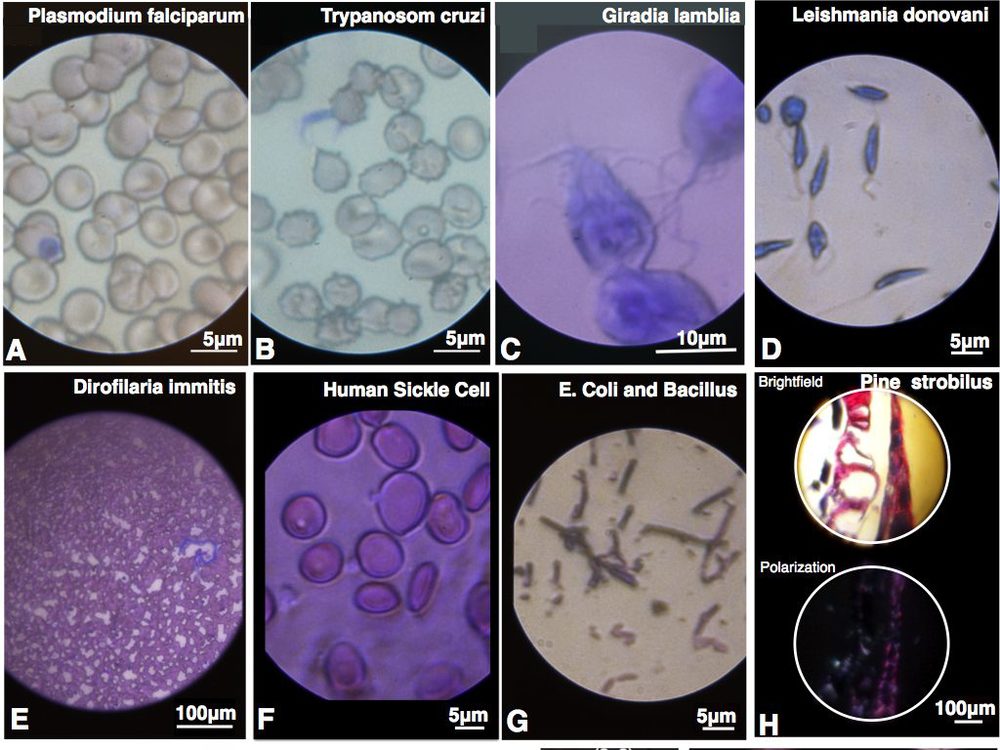
As inexpensive as it is, it can magnify up to 2000 times which is enough to enable you to see organisms such as E. coli or a face mite that was living in one of your pores (quite scary and yet quite normal).

It was developed by a team at PrakashLab at Stanford University. They have been looking on "democratizing science" by developing tools that can scale up to match problems in global health and science education.


I read about the Foldscope on newyorker.com and how with some grant money, Manu Prakash and his graduate students launched an experiment in mass microscopy by mailing 50,000 free Foldscopes to volunteer testers in more than 130 countries.

Foldscope Explore is a site where testers share photos, videos, and commentary. There are posts from plant pathologists, very young students, entomologists and citizen scientists.

potato

Proust and the Squid: Science and the Reading Brain

"We can receive the truth from nobody: we must create it ourselves." - Marcel Proust

"Human beings were never born to read," writes Tufts University cognitive neuroscientist and child development expert Maryanne Wolf in Proust and the Squid: The Story and Science of the Reading Brain.

Reading is a human invention that reflects how the brain rearranges itself to learn something new.

Wolf chronicles how the reading brain emerged. I would have assumed that it started about 5000 years ago when writing began. Wolf looks at that, but also over the course of a single child's life, and talks about the process and why children with dyslexia have reading difficulties and singular gifts.


This was a book recommendation a few years ago from a purely online friend, Bruce Schauble. I finally got to read the book, but here was Bruce's original review that piqued my interest.
"I've spent the last four days reading one of the best books about education that I've ever gotten my hands around. It goes by the unlikely name of Proust and the Squid, and the subtitle is "The Story and Science of the Reading Brain." Maryanne Wolf, the author is a cognitive scientist, an educator, a parent, and a formidably talented reader and writer. In this book, she manages to convey in a comprehensive and comprehensible way the status of our current understanding of reading as a process from pretty much every relevant point of view: historical, psychological, physiological, sociological, and educational..."

read Bruce's full review at http://throughlines.blogspot.com

The book has lots of examples to support her theories. One example theory: the brain that examined the tiny clay tablets of the Sumerians was a very different brain from the one that is immersed in today's technology-driven literacy, because the transformations in this changed reading brain have profound implications for every child.

It is not an easy book. After all, she is a professor in the department of Child Study and Human Development at Tufts University and an academic. But you can handle it.

By the way, the odd title refers to the different but complementary ways of understanding the reading process - but you'll have to read it to understand why.


The Information

The Information: A History, a Theory, a FloodWhen I picked up The Information: A History, a Theory, a Flood by James Gleick back in 2011, it was partly because of a review that mentioned Bell Labs in New Jersey.

My dad worked there after he came out of WWII. He wasn't an engineer. He was a precision tool and die maker.

He would always tell me as a kid that I had to go to college because "as good as I am at what I do, because I don't have a college degree, I will never be one of them."

We used to go to the Labs (in Murray Hill) for open houses and I recall a Christmas party sometime in the early 1960s.

My father worked there during some peak years at Bell Labs when they were developing revolutionary technologies, including radio astronomy, the transistor, the laser, information theory, the UNIX operating system, the C programming language and the C++ programming language.

In 1948, Bell Laboratories announced the invention of the electronic semiconductor. It was going to leap over anything the vacuum tube had done.

In 1956, John Bardeen, Walter H. Brattain, and William Shockley received the Nobel Prize in Physics for inventing the first transistors.

A Bell Labs scientist, Claude Shannon, helped to write A Mathematical Theory of Communication and in it he coined the word bit to name a fundamental unit of computer information.

James Gleick's The Information: A History, a Theory, a Flood is the book that got me thinking about Bell Labs.
In a sense, The Information is a book about everything, from words themselves to talking drums, writing and lexicography, early attempts at an analytical engine, the telegraph and telephone, ENIAC, and the ubiquitous computers that followed. But that's just the 'History.' 
The 'Theory' focuses on such 20th-century notables as Claude Shannon, Norbert Wiener, Alan Turing, and others who worked on coding, decoding, and re-coding both the meaning and the myriad messages transmitted via the media of their times. 
In the 'Flood,' Gleick explains genetics as biology's mechanism for informational exchange--Is a chicken just an egg's way of making another egg?--and discusses self-replicating memes (ideas as different as earworms and racism) as information's own evolving meta-life forms. 
Along the way, readers learn about music and quantum mechanics, why forgetting takes work, the meaning of an 'interesting number,' and why the bit is the ultimate unsplittable particle.' What results is a visceral sense of information's contemporary precedence as a way of understanding the world, a physical/symbolic palimpsest of self-propelled exchange, the universe itself as the ultimate analytical engine. 
If Borges's 'Library of Babel' is literature's iconic cautionary tale about the extreme of informational overload, Gleick sees the opposite, the world as an endlessly unfolding opportunity in which 'creatures of the information' may just recognize themselves.


Other Books by Gleick

Genius: The Life and Science of Richard Feynman      Faster: The Acceleration of Just About Everything     Chaos: Making a New Science