Services

Showing posts with label teaching. Show all posts

Writing Letters to Juliet Capulet

Juliet's balcony with some of her letters

Back in 2010, I saw the film Letters to Juliet. It is fluffy film with some nice views of Verona and Sienna, Italy. The plot revolves around the odd phenomenon of people writing letters to Shakespeare's most famous romantic heroine. What the film made me think about at the time was when I wrote my own letter to Juliet.
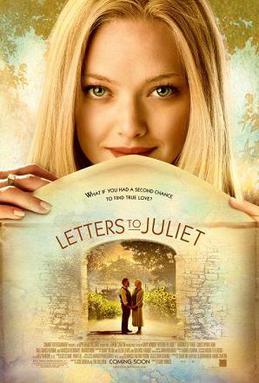

I have written letters to authors, but I must say that this was my only letter to a fictional character. When i was teaching Romeo and Juliet  I came across an article about how visitors to Verona, Italy often left letters addressed to the fictional Juliet Capulet.

People also mail her letters. They may be only addressed to  “Juliet, Verona, Italy” but they reach a destination. The Club di Giulietta is a volunteer group that answer the letters and has been doing that since the 1930s.

Was there ever a real Juliet? It seems that Shakespeare’s play was based on a similar true love story of young lovers who were separated by warring families. A historical Giulietta became a character in a narrative poem by Arthur Brooke and that is probably where Shakespeare got the idea for his version.

There are plenty of famous and popular characters of fiction, but does anyone write to them? The only other one I know of is is Sherlock Holmes.

I  asked my students to write to Juliet and some actually mailed their letters. I wrote one too and mailed it - and got an answer.

Brooke's version of Juliet was 16 years old, but Shakespeare made her just about to turn 14 (possibly to allow a young boy to play the role on stage - no females were allowed on the stage in his time – see Shakespeare in Love)  My middle school students could really identify with these young teens.

julietclub.com logo

My students had issues with the idea of the warring families. But some of my Middle-Eastern students were able to tell us about their own families' arranged marriages. Parents being opposed to your friends and prejudices against some groups was unfortunately not foreign to the students.

My letter to Juliet was written based on something that happened when I was in seventh grade. At 13, I was in love. I know now that that was not love, but back then it was absolutely real. That was my letter's topic.

I had a few innocent dates - a movie, walking home together, being at a school dance and dancing together, an embrace, a kiss. All that ended when her parents found out. Why? I wasn’t Jewish. They told her that she could not date me. I was shocked.

Unlike Juliet, she obeyed her parents. We stopped dating, but we saw each other every day at school. It was hard. It made no sense.

When I saw the Zeferelli film of Juliet that year, it all made sense. (I also developed a crush on Olivia Hussey as Juliet.) For my students, it was the Romeo + Juliet 1996 version directed by Baz Luhrmann.

In her letter to me, Juliet understood the parents decision, though she did not agree with it, and sympathized with their daughter wanting to obey her parents. She didn't recommend rebellion, but wished for better understanding amongst all.

There is a book that collects some of the letters to Juliet - Letters to Juliet: Celebrating Shakespeare’s Greatest Heroine, the Magical City of Verona, and the Power of Love.


Do We Need Learning Engineers?


Do we need learning engineers? Most people would answer that they didn't even know there was such a job. Currently, I don't think anyone does have that job (though I could imagine it being on someone's business card anyway.)

Wikipedia defines engineering as "the application of scientific, economic, social, and practical knowledge, in order to design, build, and maintain structures, machines, devices, systems, materials and processes. It may encompass using insights to conceive, model and scale an appropriate solution to a problem or objective. The discipline of engineering is extremely broad, and encompasses a range of more specialized fields of engineering, each with a more specific emphasis on particular areas of technology and types of application.'

From that I could imagine many teachers, instructional designers and trainers feeling like they might be "learning engineers."

I have read a few articles that suggest that we consider using the title.

One of those articles is by Bror Saxberg who is chief learning officer at Kaplan Inc. On his blog, he wrote:
The creative educator or instructional designer can and should draw inspiration for tough challenges from everywhere and anywhere, if there isn't evidence already available to guide him or her. Unlike many challenges faced by an artist or author, however, instructional designers and educators also need to be grounded in how the real world actually works. (Even artists have to battle with the chemistry and material properties of the media they choose, it should be noted – you might want glass to be strong enough to support something in a certain way, but you may have to alter your artistic vision to match the reality.) Simply imagining how learning might work is not enough to build solutions that are effective for learners at scale – whether we like it or not, whether we get it right or not, how learning works in the world is going to affect the outcomes at scale.

A few years back, I heard the term "design thinking" used frequently in education circles. The graduate program I teach in at NJIT is still called Professional and Technical Communications, but "design" has become part of many of the courses.

That is enough of a trend that you can hear others asking if  design thinking is the new liberal arts. One example is the "d.school" at Stanford University (formally, the Hasso Plattner Institute of Design)  which considers itself a training ground for problem-solving for graduate students. Rather than stress the typical design path of making products, they look at  design thinking as a way "to equip our students with a methodology for producing reliably innovative results in any field."

Perhaps, "learning engineer" is more of a way of rethinking how teachers and academics design instruction. Maybe it is another way to look at engineering.

A few years ago, Bill Jerome wrote about the engineering side and said: 
Imagine a more “traditional” engineer hired to design a bridge.  They don’t revisit first principles to design a new bridge.  They don’t investigate gravity, nor do they ignore the lessons learned from previous bridge-building efforts (both the successes and the failures).  They know about many designs and how they apply to the current bridge they’ve been asked to design.  They are drawing upon understandings of many disciplines in order to design the new bridge and, if needed, can identify where the current knowledge  doesn’t account for the problem at hand and know what particular deeper expertise is needed.  They can then inquire about this new problem and incorporate a solution.
I think that there is a place for design thinking in engineering and also an engineering approach to designing instruction.

Design thinking as an approach to problem solving is often described using some basic principles:
  • Show Don’t Tell
  • Focus on Human Values
  • Craft Clarity
  • Embrace Experimentation
  • Be Mindful of Process
  • Bias Toward Action
  • Radical Collaboration

Those could be viewed as five modes that fit easily into engineering and education: empathize, define, ideate, prototype, test.

Saxberg gives the example of needing someone to design a new biotech brewing facility. Do you want a chemist or a chemical engineer? He says the engineer - someone who "deeply understands modern chemistry... but is also conversant with health regulations, safety regulations, costs of building, and thinks in an integrated way about designing things for scale."


Do we have "learning engineers" now that understand the research about learning, test it, and apply it to help more students learn more effectively? Are they teaching or are they doing research? Do all teachers need to be learning engineers?

I somewhat fear that if the title becomes used that it will end up leaning heavily towards educational technology. That's something I see happening to many "teaching and learning" and "teaching excellence" center at colleges.

Technology can help. I have spent the past fifteen years working with that. But there is no guarantee that instructors using technology will somehow be better instructors. We know a lot about how people learn, but most of that isn't being used by those who teach.

When I started at NJIT in 2000, I was hesitant about telling seasoned instructors "how to teach" (pedagogy). But I was pleasantly surprised by two things. First, the people who came to me or to our workshops were open to learning not only about new technology but about pedagogy. I was also surprised by how many of them were willing to say that no one had ever taught them "how to teach" and that they were always a little unsure about running only on intuition and their personal experiences with learning. "I try to teach like the good teachers I had and avoid being like the bad ones," was a sentiment I heard fairly frequently.

Having come from teaching in a secondary school where everyone had a split educational background of subject matter expertise and educational pedagogy with continuing professional development in the latter, it took some transitioning for me to settle into the higher education setting.

Being that NJIT is very much an engineering (and design) institution, the idea of learning engineers might have been a good approach to take with that faculty.


But Has Technology Really Changed Your Pedagogy?

Classroom


Although those of us in educational technology constantly talk about how it has changed education and how it will change education, it is much harder to explain how it has changed teaching.

If all the technology you use in the classroom were gone tomorrow, how would it affect the way you teach? 

Has your philosophy, your pedagogy or your methodology changed  in any permanent way?

Take away the computers and the Internet and projectors, your electronic gradebook and all the rest, and I am sure any good teacher could still teach.

There are media stories all the time about people trying to go "cold turkey" on their connections by giving up the Net or their smartphones. It's difficult, But I suspect that giving up all the technology in your classroom would be easier for most teachers K-20.

Could you go back to paper books, papers, pens, a non-digital whiteboard  or easel?  Sure, you could. But would you actually teach differently?

I have read several times that if doctors, engineers or even farmers lost all the technology created in the past 30 years, they would have a very difficult time doing their jobs as well using the methodologies of 1983. Not true of teachers?

Yes, this is a very hypothetical question to ask and the technology isn't going away (except for those short-term situations after disasters). My thought experiment is to take the 2013 math teacher and put her in a 1983 classroom world. How does she teach? Whatever falls away is what technology changed in her pedagogy. Would the science teacher be more affected than the language teacher?

My own personal reflection on this is that as much as I use technology in my preparation to teach and in the classroom, I don't think my own teaching style has been dramatically changed over the years by technology.

The biggest exception is my online teaching. If that needed to go back to 1983 and some correspondence model of distance learning, it would require a major shift in my content and my methods - but my philosophy and pedagogy would not change as much.

What the Best Teachers Do Online

teacher

I did a full day this week with faculty at Raritan Valley Community College as the first day of their three days of faculty technology and teaching days.

They were offering a lot of ways to supplement and expand the physical classroom with a learning management system and tools like Twitter, Google Drive, Pinterest, Google tools beyond Google search and YouTube. Some of this is aimed at online and hybrid teachers working on developing online components or flipping their classrooms with resources to do it like those mentioned and screencasting and Khan Academy.

The person who asked me to facilitate the first day said that she wanted to offer a kind of a National Great Teachers Movement retreat that brings teachers from different teaching fields together to explore teaching and learning, innovations and solutions. I was not familiar with that movement, although it goes back to 1969 when David Gottshall started it. It is not about teaching in a specific discipline, but rather on the art of teaching.

What I found appealing about the day - from my point of view - was that I was not being asked to give a talk or a presentation. I wasn't supposed to bring PowerPoint slides. I was to facilitate discussion using the collective wisdom of the group, their experiences and the creativity of the group.

Of course, that's also scary. What if people don't want to talk, share and do activities?


I suspect we all want to renew ourselves professionally and personally, but how much effort are we willing to put towards that?

I was familiar with Ken Bain's What the Best College Teachers Do which also examines what makes a great teacher great. Bain did a 15-year study of a hundred college teachers in a wide variety of fields and universities trying to figure out what the best teachers do.

If there is a short answer to the question, it might be that it actually is not what teachers do, it's what they understand.

He believes that the plans and assignments and lecture notes matter less than the way the best teachers comprehend the subject and value human learning.

I don't think that in the five hours I would have faculty in a room with me, that level of transformation could occur, but I did think we could start people down the path.

But the twist in my day beyond either of those other approaches is that we were talking about being a great teacher online.

Some of the topics we discussed were:
  • What is instructor presence in the online classroom? 
  • How do we best engage students? How do we, as teachers, stay engaged too?  The best teachers I ever had were engaged in their subject and that's why I was engaged in their class.
  • The importance of feedback to students and to teachers.
  • What does teaching online offer us a teachers that we don't get in a physical classroom? I like that because most of the time I hear teachers talk about what they can't do online that they can do face-to-face.
  • What can we learn from MOOCs? I don't think they will replace college courses or even online courses, but I know they will change how we do online learning and how we teach on and offline.
  • We all shared our own best practices of online pedagogy/methodology and of using the technology. We also shared the challenges of teaching online that persist even after doing it for years.

I did have some prepared materials in case the talk slowed down.  But it didn't slow down, so I gave out those materials on academic integrity online, prevention versus detection, and pedagogy compared to andragogy as readings to take away. They are good topics and ones teachers like to discuss, but we had plenty to talk about with the earlier topics.

And that's the way it was supposed to happen.

Looking at Massive Open Online Courses (MOOC) and Academia


I'm setting up a course to provide an introduction to using Massive Open Online Courses (MOOCs) in academic settings that will be a meta-MOOC itself (a MOOC about MOOCs).

A MOOC is generally a course where the participants and the course materials are distributed across the web and the courses are "open" and offered at no cost to a very large number of participants who do not receive institutional credit.

I'm doing this for NJEDge.NET and the course will be offered via the Canvas Network.  Canvas is an open-source learning management system by Instructure Inc. It is released under the AGPLv3 license for use by anyone interested in learning more about or using learning management systems.

Canvas Network gives teachers, learners and institutions alike the place and platform to define the world of open online learning in a way that makes sense for everyone. It grows as teachers and learners apply it in individual ways and then share the results with the world.

Built on the same Canvas platform that millions already use to learn every day, Canvas Network will grow to be a gathering place for the open online courses, communities and collections that millions more will be able to use to evolve learning to meet their goals.
The course -which is more of a Conversation -  is set to launch in April 2013 and run for 4 weeks. It will be open and free to anyone interested. There are a number of courses being offered now at www.canvas.net.

One of the courses there is "Learning Analytics and Knowledge" taught by Dr. George Siemens, Associate Director of the Technology Enhanced Knowledge Research Institute at Athabasca University, where he leads the learning analytics research team. That course will run from February 11, 2013 to Apr 7, 2013. Siemensis  one of the earliest MOOC teachers, and the author of Knowing Knowledge (a Handbook of  Emerging Technologies for Learning and Knowing Knowledge).

"Academia and the MOOC" will briefly cover the history and development of MOOCs and it will engage participants in discussions of why institutions are offering these courses, and the possible benefits to both a school and to students. We will look at MOOCs from several perspectives: as an instructional designer building and supporting a course; as an instructor; as a student; as an institution offering the course.

UPDATED INFORMATION

Teachers Writing About Teaching

I'm reading Pat Conroy's newest book, South of Broad, this week, but I looked back on my bookshelf at his books and remembered when I first encountered him.

It was the book, The Water Is Wide: A Memoir, which is about his teaching experience on a very poor South Carolina island in 1969.

The book came out while I was an undergrad and I read it along with a shelf full of other books about teaching by teachers as part of my prep to start my own teaching career.

Many of those books were about well-meaning, optimistic young teachers who were in frustratingly impossible classroom situations.

Conroy's isolated island community had the same students who were far behind where they should be, no funding, no real curriculum, no textbooks, racism and bonehead administrators that I found in books from To Sir, With Love to Up the Down Staircase.

All these books painted a really horrible picture of what I should expect in the classroom. But, they also offered humor and, ultimately, teachers triumphing over adversity. Conroy also realized that he didn't all he wanted to accomplish. A good lesson.

The book also became a movie called Conrack (the name his students gave him).

I don't know that I ever consciously used any of the book in a class I taught, but I bet that Pat Conroy's books have had an impact on me as a teacher.


World's Greatest Dad


I got one of those "World's Greatest Dad" t-shirts and a mug too back in the early days of fatherhood. There were a few years when it seemed like I was deserving of the title - especially on those days when I walked in the door after work and the boys ran to me yelling, "Daddy's home!"

Now, there is a movie out called World's Greatest Dad. The dad is a high school English teacher. (Well, it says "high school poetry teacher" but I can't imagine him having 5 or 6 classes of just poetry.)

So, they got me with the film's basics: he is a teacher (I have been doing that a long time); poetry (check); he's depressed at least partially because he writes but doesn't get published (check on the bummed out and check on the not getting published); he has a son (check times two).

It stars Robin Williams, who I really like, but even I will admit that he has made some bad script choices over the years, and when he gets really hyper, he can be pretty annoying.

Maybe he needs a strong director and tight script to show him at his best. I love Williams in a bunch of films, some hits, some not: The World According To Garp, What Dream May Come, The Fisher King, Awakenings, Good Will Hunting. I even like some films where Williams is allowed to go crazy and does it well - Aladdin fits that category. And Robin has played the high school English teacher well before - in Dead Poets Society.

So who directed this film? Bobcat Goldthwait. Uh-huh, Goldthwait, the once-crazy, screeching, standup ­comedian-now-turned-filmmaker. You know how they give kids with attention deficit disorder (ADD) amphetamine-like drugs to calm them down? Counter-intuitive, right? But it seems to work. Williams + Goldthwait. It might work.

Actually, the have worked together before. That film is a cult fave called Shakes the Clown. According to the reviews I have seen of the new film, Bobcat seems to keep Robin pretty much in control.

The film's title (and the trailer too to a degree) unfortunately makes you think it's a "family comedy" (let's not mention Williams' Fathers' Day and RV), but I think the film is trying to be something else.

The story centers on Lance Clayton (Williams), high school poetry teacher, and his equally (maybe more so) bummed-out son, Kyle.

The film begins is back and forth between the two. It sounds like the second half shifts into something more surreal and the mask of tragedy comes out. (I have read reviews that compare it to a weaker Donnie Darko and that say the film's plot transition goes "faster than you could page Patch Adams." )

Now, this post is not a REview but a PREview. It's what I am thinking before I enter the theater - or if things really seem grim before I add it to my Netflix queue. But I am curious about the film.

If you saw it, feel free to post a comment - but no spoilers.